
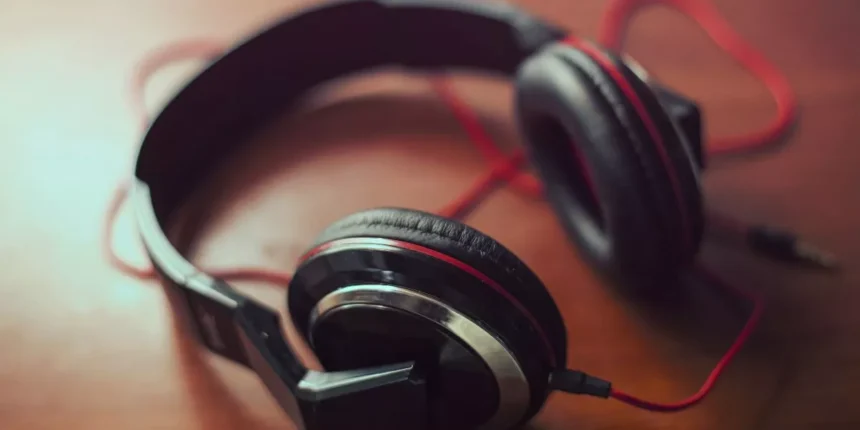
For home binge-watching, choosing the right headphones changes how films and shows land. The writer outlines five models that balance deep bass, clear dialogue and a spacious soundstage for immersive listening. Each option targets different needs — budget, kids, low latency, long battery and stronger active noise cancellation — offering practical choices for varied viewers. More specifics follow to help narrow the best fit.
- boAt Rockerz 550/558 Over-Ear Bluetooth Headphones (Black)
- pTron Studio Evo Wireless Over-Ear Headphones (Black)
- Skullcandy Grom Over-Ear Wireless Kids Headphones (Volume-Limiting, 45Hr Battery)
- Noise Airwave Max 5 Wireless Over-Ear Headphones (Carbon Black)
- Boult Fluid X Over-Ear Bluetooth Wireless Headphones (Green)
- Factors to Consider When Choosing Headphones for Watching Movies and OTT Content
- Soundstage and Imaging
- Bass Depth and Control
- Dialogue Clarity
- Noise Isolation Vs ANC
- Comfort for Long Sessions
- Low Latency Performance
- Wireless Range and Stability
- Battery Life and Charging
- Conclusion
boAt Rockerz 550/558 Over-Ear Bluetooth Headphones (Black)
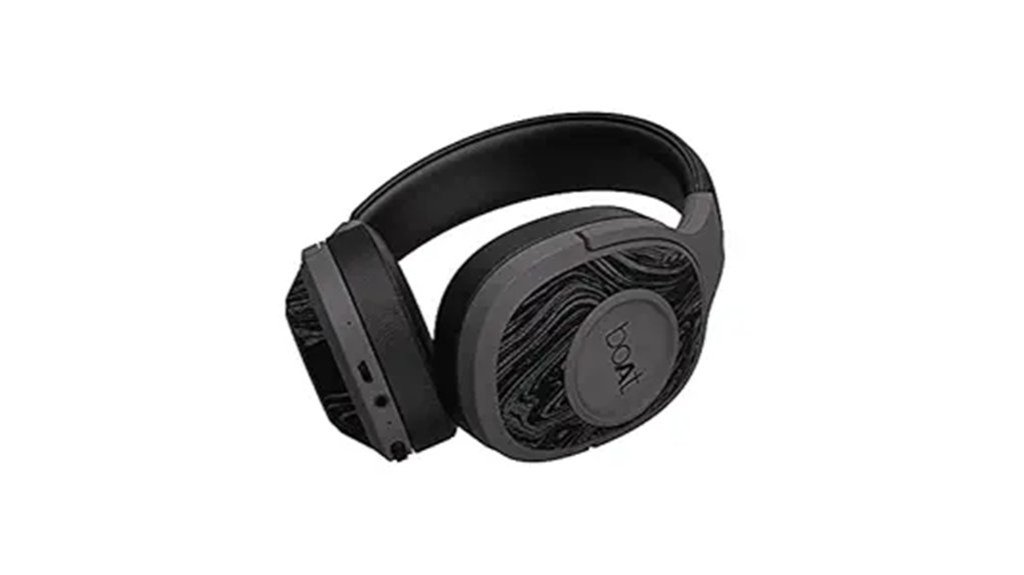
For viewers seeking an affordable, battery‑durable pair of over‑ear headphones tailored to movies and OTT content, the boAt Rockerz 550/558 delivers long playback (up to 20 hours) and 50 mm drivers that emphasize bass and immersive low‑end, making it a strong budget choice for casual movie watching and streaming. The lightweight plastic build, plush oval cushions and passive noise isolation aid comfort during long sessions. Bluetooth 5.0 and optional 3.5 mm wired use provide flexible connectivity, though some users report wired play/pause and balance issues. Microphone, assistant support, water resistance and a 500 mAh battery reinforce its value-for-money positioning.
Best For: casual listeners and budget-conscious viewers who want long battery life and bass-forward, comfortable over-ear headphones for movies, streaming and everyday use.
Pros:
- Long playback up to 20 hours with a 500 mAh rechargeable battery, great for extended viewing sessions.
- 50 mm drivers deliver strong bass and immersive low-end suited to movies and OTT content.
- Comfortable lightweight design with plush oval cushions and passive noise isolation for long-wear comfort.
Cons:
- Uses a micro-USB charging port instead of USB-C and has some durability complaints over time.
- Some users report wired-mode issues (play/pause functionality and occasional left/right balance discrepancies).
- Not ideal for competitive gaming due to noticeable latency for aggressive gamers.
pTron Studio Evo Wireless Over-Ear Headphones (Black)
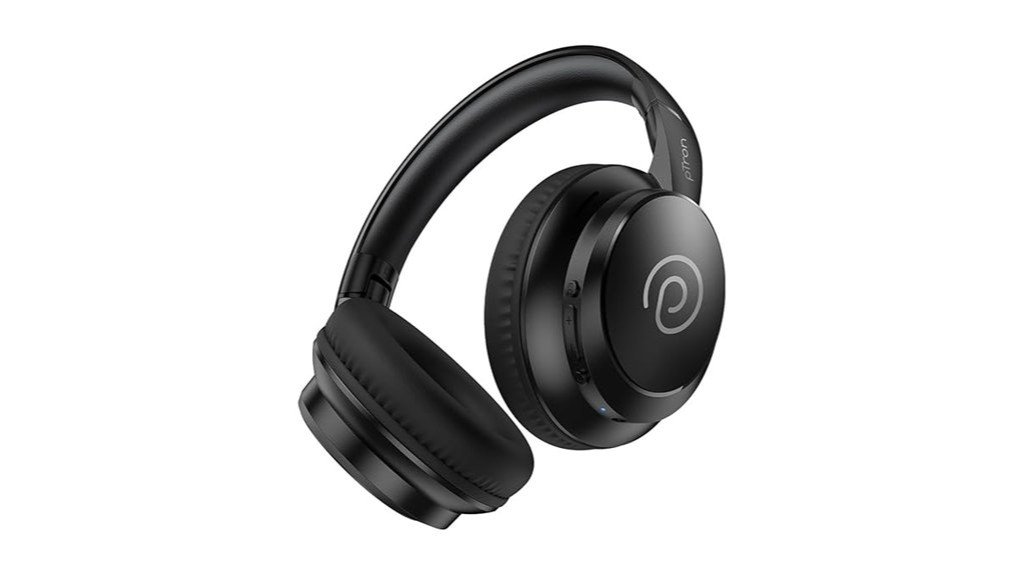
Ideal for viewers who prioritize long, cinematic listening sessions, the pTron Studio Evo delivers punchy bass and rich stereo sound with up to 70 hours of battery life on a single charge. Lightweight at 157 g, the over-ear Studio uses 40 mm dynamic drivers, Bluetooth 5.3, and four low-latency EQ presets tuned for gaming, movies, music. It supports dual-device pairing, wired 3.5 mm use, USB-C fast charging (~2 hours), and voice assistant access. Ergonomic foldable design, soft cushions, IPX5 splash resistance, and onboard controls suit marathon viewing. A built-in HD mic handles handsfree calls; one-year warranty included.
Best For: users who want lightweight, long‑battery over‑ear headphones with punchy bass and low‑latency modes for marathon listening, gaming, and multimedia on the go.
Pros:
- Up to 70 hours battery life with ~2-hour USB‑C fast charging.
- Bluetooth 5.3 with dual‑device pairing, plus 3.5 mm wired option and four low‑latency EQ modes.
- Lightweight (157 g), foldable ergonomic design with IPX5 splash resistance and soft cushions.
Cons:
- Sound isolation (passive) may not match active noise cancellation for noisy environments.
- Warranty covers manufacturing defects only (1 year); limited coverage for accidental damage.
- May lack advanced audiophile features (e.g., customizable EQ app or high‑res codecs) for picky listeners.
Skullcandy Grom Over-Ear Wireless Kids Headphones (Volume-Limiting, 45Hr Battery)
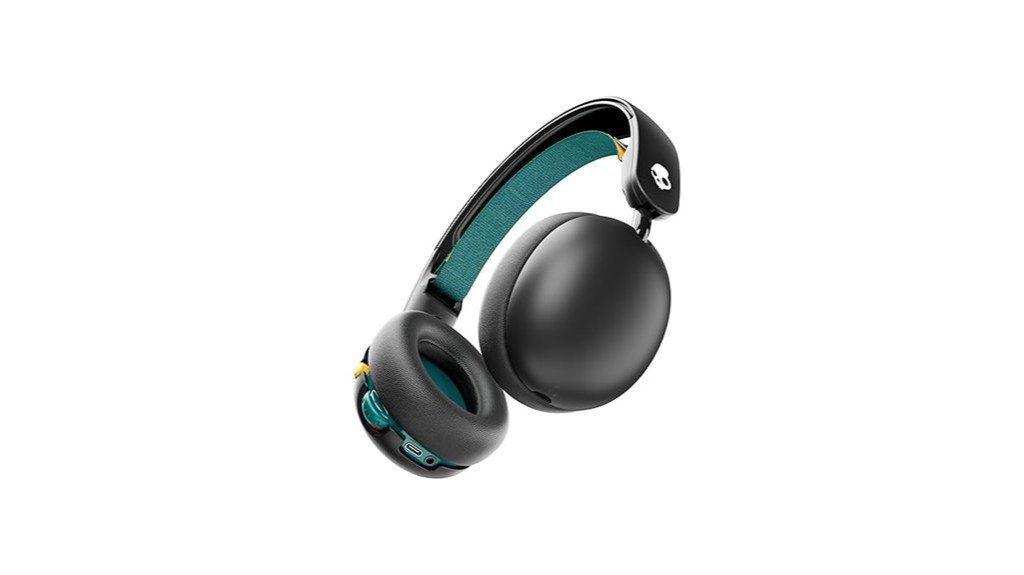
Skullcandy’s Grom over-ear wireless headphones are best suited for parents seeking a durable, kid-friendly set that enforces safe listening with a 85 dB volume cap while still offering long battery life (around 44–45 hours) for extended movie or OTT sessions. Lightweight, collapsible and adjustable, the Grom uses a dynamic driver and sound-isolating cushions to deliver clear, safe audio for kids. Bluetooth pairing and a detachable 3.5 mm AUX enable wireless or wired listening and Share Audio. Rapid 10-minute charging yields about four hours playback. Touch controls ease operation. Reviews praise comfort and battery life; some note occasional Bluetooth issues and modest sound quality.
Best For: Parents seeking a durable, kid-friendly over-ear headphone with safe volume limiting (85 dB), long battery life, and simple wireless or wired use for travel, school, and media.
Pros:
- Long battery life (about 44–45 hours) with rapid 10-minute charge providing ~4 hours playback.
- Kid-safe 85 dB volume limit with an override option for louder environments; lightweight, collapsible, and comfortable design.
- Bluetooth wireless plus detachable 3.5 mm AUX (Share Audio) and touch controls for easy connectivity and use.
Cons:
- Some users report occasional Bluetooth pairing/connectivity issues.
- Sound quality considered modest by a subset of reviewers compared with adult-focused headphones.
- Volume limit override may be needed in noisy situations, reducing the built-in safety benefit unless managed.
Noise Airwave Max 5 Wireless Over-Ear Headphones (Carbon Black)
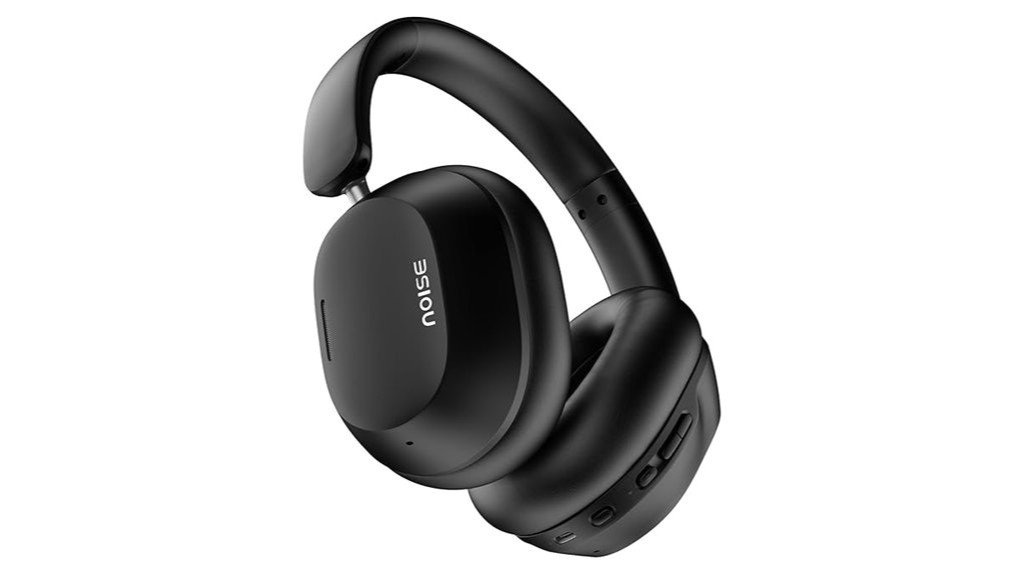
Boasting Adaptive Hybrid ANC up to 50 dB and 3D surround sound, the Noise Airwave Max 5 suits viewers who prioritize immersive, low-frequency movie audio and extended listening sessions. Its 40 mm drivers with High Fidelity Acoustics deliver strong bass and clear mids across 20–20,000 Hz, while Adaptive ANC targets low-frequency noise. Features include Bluetooth 5.2, dual device pairing, ultra-low latency (listed 30 ms; spec shows 50 ms), and up to 80 hours playback with 1.5-hour USB-C fast charging. At 250 g with foldable, cushioned earcups, the plastic-and-metal build feels premium; complaints focus on voice ANC, mic quality, and lack of app EQ.
Best For: viewers and casual gamers who want immersive, bass-forward movie and music listening with long battery life and affordable ANC performance.
Pros:
- 40 mm HFA-tuned drivers with strong bass and clear mids for immersive sound.
- Adaptive Hybrid ANC up to 50 dB and long battery life — up to 80 hours with 1.5-hour USB-C fast charging.
- Lightweight (250 g), foldable design with comfortable cushioned earcups and dual-device Bluetooth 5.2 pairing.
Cons:
- ANC performance inconsistent for higher-frequency noises and voices; mic/call quality is weak.
- No companion app or EQ/customization options for tuning sound to preference.
- Occasional Bluetooth pairing/latency issues (listed 30 ms vs spec 50 ms) and some users report comfort/sweat problems on long wear.
Boult Fluid X Over-Ear Bluetooth Wireless Headphones (Green)
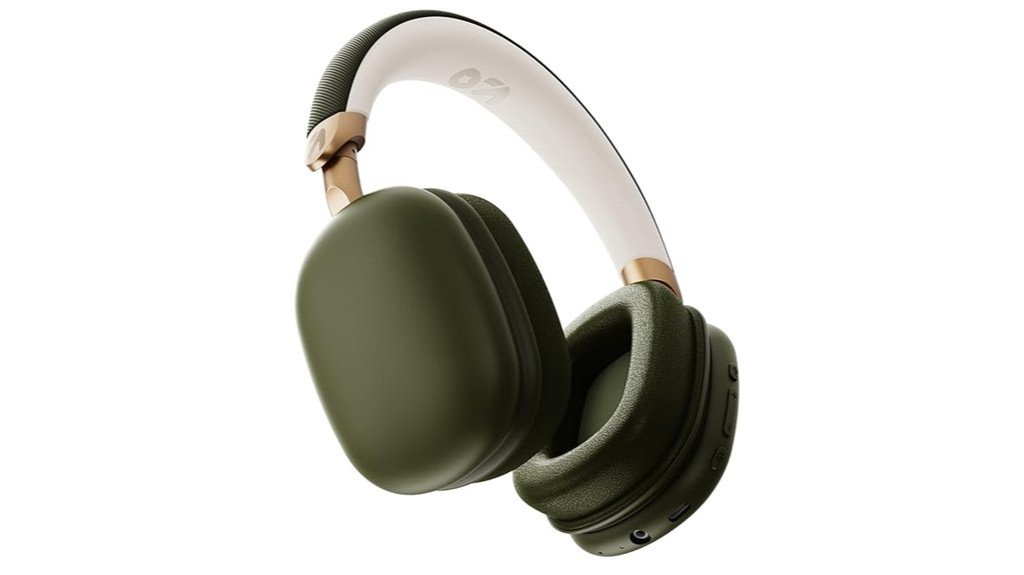
The Boult Fluid X suits viewers who prioritize long battery life and comfortable over-ear wear during extended movie sessions, offering up to 60 hours of playtime and soft memory-foam cushions for prolonged use. These foldable Bluetooth v5.4 headphones feature 40 mm bass-boosted drivers (BoomX), a 60 ms low-latency gaming mode, and ZEN ENC mics for clearer calls with passive earcup isolation. Fast charging yields three hours playback from ten minutes, and IPX5 splash resistance supports active use. Controls include touch and buttons, Type-C charging, wired option and voice assistant support. Sound is balanced; heavy-bass seekers may want more.
Best For: Viewers and casual gamers who want long battery life, comfortable over-ear fit for extended use, and reliable wireless performance with decent bass and clear calls.
Pros:
- 60-hour marketed battery life with fast charge (10 min → ~3 hrs) for extended use and quick top-ups.
- Comfortable memory-foam earcups, foldable compact design, and IPX5 splash resistance for everyday and active use.
- Bluetooth 5.4 with 40 mm bass-boosted drivers, 60 ms low-latency gaming mode, and ZEN ENC mics for clearer calls.
Cons:
- Bass may be insufficient for heavy-bass enthusiasts despite “BoomX” drivers.
- ENC/passive isolation and noise cancellation effectiveness can be inconsistent for some users.
- Some reported fit/size issues and lack of included aux cable or dual-device pairing limitations.
Factors to Consider When Choosing Headphones for Watching Movies and OTT Content
Choosing headphones for films and streaming requires attention to several technical and comfort-related factors. Key considerations include soundstage and imaging for spatial cues, bass depth and control for impact, and dialogue clarity for intelligibility, balanced against noise isolation versus active noise cancellation. Comfort for long sessions completes the checklist, since fit and padding affect immersion over extended viewing.
Soundstage and Imaging
Many viewers rely on a wide soundstage and accurate imaging to separate on-screen dialogue, ambient effects, and music so that directional cues—like off-screen footsteps or panning instruments—feel natural and localizable. Soundstage refers to perceived lateral and depth space; imaging is the precision of placing voices and instruments across that field. Coherent phase response and low inter-channel crosstalk preserve spatial cues from stereo and upmixed surround tracks, improving envelopment and consistency of directional effects. Open-back or well-tuned over‑ear designs generally yield larger, more natural soundstages than small closed-back or in-ear models, which often appear “in‑head.” A balanced frequency response—clear mids and even highs with controlled lows—prevents masking and sustains believable localization without sacrificing detail.
Bass Depth and Control
A robust sense of space from soundstage and imaging must be underpinned by bass that reaches low enough and decays cleanly; without accurate sub-bass and controlled low-frequency behavior, explosions and rumble can overwhelm dialogue and blur directional cues. Listeners should prioritize headphones that reproduce deep bass (20–60 Hz) with extension toward 20 Hz rather than merely boosted mid-bass peaks. Tight bass control—low distortion and quick decay—preserves on-screen detail; boomy low end muddies midrange information. Driver size and sensitivity influence perceived fullness at low volumes, but enclosure design and tuning determine accuracy. Practical selection favors models with measured bass extension and low distortion, and with low-latency modes or DSP tuned for movies to keep sub-bass hits synchronized with visible action.
Dialogue Clarity
How should dialogue read through headphones so every line is intelligible without fighting the soundtrack? Dialogue should sit clearly in a balanced mid‑range (roughly 300 Hz–4 kHz), where speech intelligibility resides, with a neutral or vocal‑forward signature. Moderate bass is preferable; excessive sub‑bass can mask voices. Closed‑back or well‑sealing over‑ear designs provide passive isolation that enhances perceived detail and reduces room noise. Good transient response and low distortion keep consonants and sibilance crisp at normal listening levels. For varied content, models offering adjustable EQ or a presence/voice enhancement are useful to boost the 1–3 kHz region when needed. Prioritizing these traits ensures spoken lines are distinct without artificial emphasis or fatigue.
Noise Isolation Vs ANC
When selecting headphones for movies and streaming, listeners should weigh passive isolation against active noise cancellation (ANC) because each handles different noise bands and affects perceived sound differently. Passive isolation from earcup seal and padding attenuates mid‑to‑high frequencies without electronics, preserving natural soundstage and often improving dialogue clarity. ANC targets consistent low‑frequency noise (aircraft rumble, HVAC) via microphones and processing, which can deepen perceived bass in film soundtracks. Since ANC is most effective below ~1 kHz while passive isolation handles higher frequencies, a good seal plus ANC yields the broadest reduction across the audio band. However, ANC may introduce slight processing artifacts or alter spatial cues; selectable ANC modes or the ability to disable it lets listeners retain passive transparency for quiet, detail‑rich scenes.
Comfort for Long Sessions
For marathon viewing sessions, comfort becomes as important as sound quality, so choosing headphones that minimize pressure, heat, and fatigue ensures attention stays on the content. Over‑ear designs with large, soft memory‑foam cushions and ergonomic clamping force distribute weight evenly and reduce pressure on ears and temples during multi‑hour OTT sessions. Lightweight builds (about 150–300 g) and adjustable headbands minimize neck strain while maintaining a secure fit. Breathable earcup materials and deeper pads prevent heat buildup and sweating. Hinge, fold, and swivel designs that allow natural positioning and smooth adjustments avoid hotspots and prolong comfort. Finally, balance battery life against added weight: longer wireless playback means fewer interruptions, but larger batteries can compromise passive comfort, so match playtime needs to ergonomics.
Low Latency Performance
In choosing headphones for movies and OTT, latency — the delay between picture and sound — is a critical metric: below about 50 ms is generally acceptable, while under 30 ms is preferred for imperceptible lip‑sync. Evaluate codec and connection: aptX Low Latency or LC3 and wired/USB links deliver substantially lower delay than SBC, which can exceed 100 ms. Review manufacturer‑listed latency in both normal and “low‑latency” or gaming/movie modes, since those modes often cut delays from ~60–100 ms to ~30–50 ms. Note that dual‑device pairing or heavy Bluetooth interference can introduce additional latency spikes despite a low baseline. For streaming apps, enable device/app lip‑sync correction and favor wired connections or transmitters that explicitly support low‑latency codecs.
Wireless Range and Stability
Frequently overlooked, wireless range and connection stability are key practical concerns for movie and OTT viewers because interruptions or signal dropouts break immersion and can desynchronize audio. For uninterrupted viewing, Bluetooth 5.0 or newer is recommended for improved theoretical range (around 10 metres) and stronger connections versus older versions. Real-world indoor coverage is often much lower — walls, furniture and people commonly cut effective distance roughly in half. Low-latency codecs (aptX Low Latency, AAC, LC3) and headphones with audio latency under ~50 ms preserve A/V sync. Multipoint or dual‑device pairing prevents reconnection pauses when switching between a streaming source and a phone. Models and transmitters that use adaptive retransmission, frequency-hopping, or higher Bluetooth versions reduce dropouts in crowded wireless environments.
Battery Life and Charging
While reliable wireless range prevents audio dropouts, battery life and charging determine how long that uninterrupted experience can be sustained. Buyers should target 20–40 hours of continuous playback to cover multiple films or long travel without frequent recharges. Manufacturer specs must include wireless playback time and any reduced runtime with features such as ANC or spatial audio enabled. Real‑world endurance typically falls 10–30% below lab figures due to volume, codec, Bluetooth version and lights. Charging type and speed matter: USB‑C fast charging that delivers several hours from a 10–15 minute top‑up is preferable to slow micro‑USB. For heavy daily use over years, consider models with replaceable batteries or a long rated cycle life to limit degradation and extend service life.
Conclusion
For immersive home viewing, these five headphones each prioritize strengths that matter for movies and OTT content: deep, controlled bass for cinematic impact, clear mids for dialogue, and a wide soundstage to place effects and voices naturally. From budget-friendly boAt and long‑lasting Boult to kid‑safe Skullcandy, lightweight pTron with low‑latency modes, and the hybrid‑ANC Noise Airwave Max 5, users can match features to priorities—comfort, battery life, latency, isolation, and child safety.