


In 2025, buyers seeking the best smartphones under ₹25,000 weigh performance, battery life, display quality and software support. The shortlist includes models that balance raw speed with dependable cameras and future OS updates. Each pick targets a different priority — durability, design, fast charging, camera prowess or clean software — so the right choice depends on what matters most to the user. Which tradeoffs are worth it will shape the final decision.
- Samsung Galaxy A55 5G Smartphone (8GB RAM, 128GB, Awesome Navy)
- Nothing Phone (3a) 5G (8GB RAM + 128GB Storage) (White)
- OnePlus Nord CE5 Smartphone (8GB + 128GB)
- Redmi Note 14 Pro 5G Smartphone (Champagne Gold, 8GB/128GB)
- iQOO Z10 5G Smartphone (8GB RAM, 128GB)
- Factors to Consider When Choosing 5 Smartphones Under ₹25,000 in India
- Performance & SoC
- Display Quality
- Battery & Charging
- Camera Capabilities
- Software & Updates
- Build & Durability
- Connectivity Options
- Value for Money
- Conclusion
Samsung Galaxy A55 5G Smartphone (8GB RAM, 128GB, Awesome Navy)
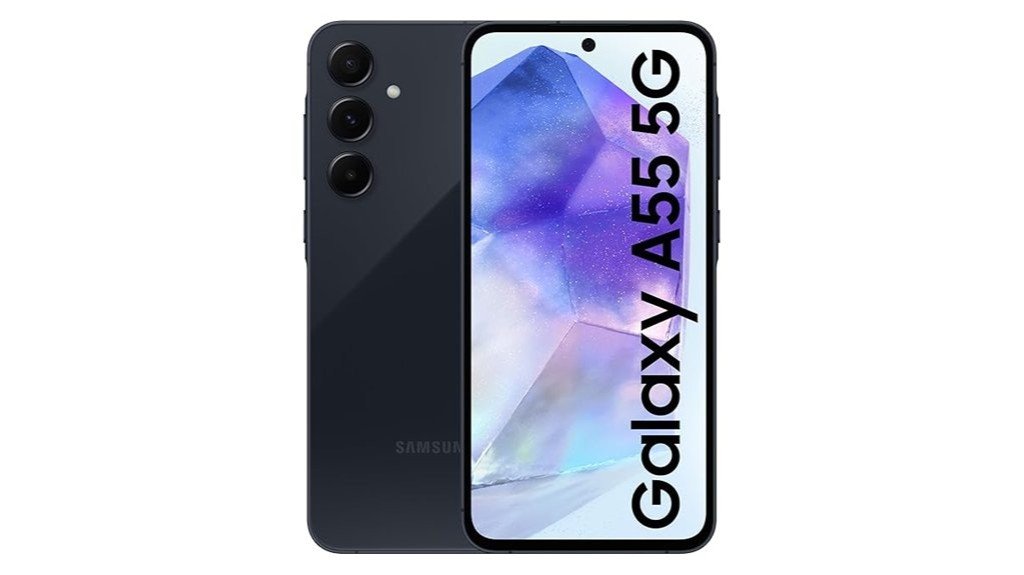
The Samsung Galaxy A55 5G — Awesome Navy (8GB/128GB) is ideal for users seeking a balanced mid‑range phone that prioritizes a bright 6.6″ FHD+ Super AMOLED 120Hz display, long battery life, and camera versatility with a 50MP OIS main sensor, all backed by four promised OS upgrades and Samsung Knox security. It runs Android 14 on Exynos 1480, pairs 8GB RAM with 128GB storage, and houses a 5000mAh battery with 25W fast charging. Durable Gorilla Glass Victus+, IP67 water resistance, vapor‑chamber cooling, dual SIM 5G, AI camera features, Samsung Wallet, and a premium metal frame complete its value proposition.
Best For: Users seeking a value-driven mid‑range smartphone that balances a bright 6.6″ 120Hz Super AMOLED display, long battery life, and versatile camera features with reliable software support and hardware durability.
Pros:
- Bright, smooth 6.6″ FHD+ Super AMOLED 120Hz display with Vision Booster and Always On Display.
- Long‑lasting 5000mAh battery with 25W fast charging and efficient Exynos 1480 performance for daily tasks.
- 50MP main camera with OIS, AI enhancements (Nightography, object eraser, image remaster), IP67 water resistance, and Gorilla Glass Victus+ durability.
Cons:
- Mid‑range chipset may show occasional stutters under heavy gaming or sustained high load.
- Charger not included in-box (only USB‑C cable) and some users reported cable durability concerns.
- Reports of touch responsiveness issues in certain scenarios (pouch or flat on table).
Nothing Phone (3a) 5G (8GB RAM + 128GB Storage) (White)
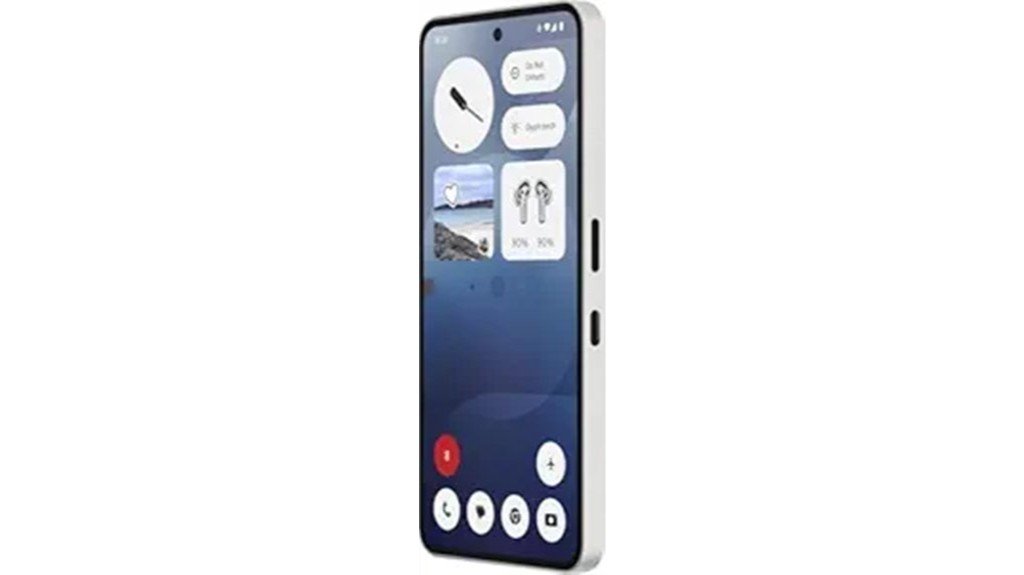
Who benefits most from the Nothing Phone (3a) 5G? Users seeking distinctive design, clean Android 15 UX and long battery life find it compelling. The 8GB/128GB White variant pairs a 1080×2392 display with 5000mAh battery and reliable connectivity (Bluetooth, Wi‑Fi, GPS), delivering day‑long use and solid daytime photos. At 16.4×7.7×0.8 cm and 330 g, it leans large yet remains manageable. Strengths include smooth performance, strong battery and polished UI; compromises are no charger in-box, build that feels less premium, and average low‑light camera. Priced under ₹25,000, it balances value and unique styling for mainstream users.
Best For: Users who want a distinctive-design phone with a clean Android 15 experience, strong battery life, and reliable daytime camera performance at a value price point.
Pros:
- Smooth performance and polished UI with Android 15 and 8GB RAM.
- Long-lasting 5000mAh battery delivering day‑long use.
- Distinctive, sleek design and reliable connectivity (Bluetooth, Wi‑Fi, GPS).
Cons:
- No charger included in the box (charger sold separately).
- Larger and somewhat heavy (330 g), may feel bulky for some users.
- Build quality feels less premium and low‑light camera performance is only above average.
OnePlus Nord CE5 Smartphone (8GB + 128GB)
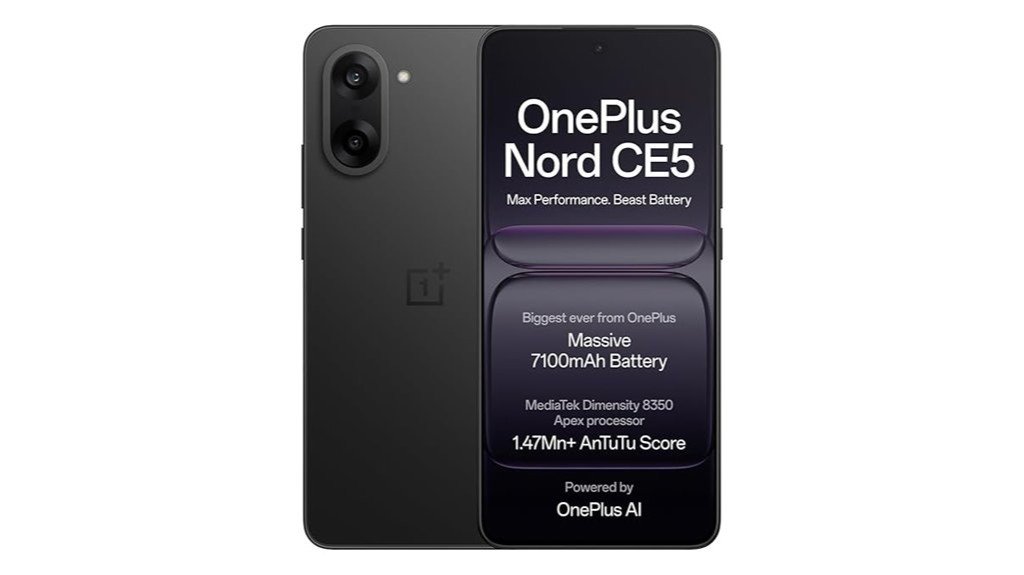
Designed for power users who need long battery life and smooth performance on a budget, the OnePlus Nord CE5 (8GB + 128GB) pairs a 7,100mAh battery with MediaTek Dimensity 8350 Apex performance and a 6.77″ 120Hz AMOLED, making it ideal for heavy multitasking, extended gaming sessions, and media consumption without frequent charging. The phone delivers 1.47M+ AnTuTu performance, 120 FPS gaming support, Android 15 with OxygenOS 15 and OnePlus AI tools. Imaging includes a 50MP Sony main sensor with OIS and 4K60 video. Included 80W fast charging, bypass charging, Aqua Touch, mono speaker, and 4/6 years software/security support.
Best For: power users and heavy media/gaming consumers who want multi-day battery life and smooth performance on a mid-range budget.
Pros:
- Massive 7100mAh battery with 80W fast charging and Bypass Charging for extended gaming and up to ~2.5 days typical use.
- Strong performance (MediaTek Dimensity 8350 Apex, 1.47M+ AnTuTu) with up to 120Hz AMOLED display and 120 FPS gaming support.
- 50MP Sony main camera with OIS and 4K60 video plus OnePlus AI tools and long software/security support (4 years OS, 6 years security).
Cons:
- Mono speaker may limit onboard audio quality for media playback.
- No wireless charging mentioned and reliance on USB‑C for audio (no 3.5mm jack).
- 8GB + 128GB configured variant may be limiting for heavy storage users compared with higher-capacity options.
Redmi Note 14 Pro 5G Smartphone (Champagne Gold, 8GB/128GB)
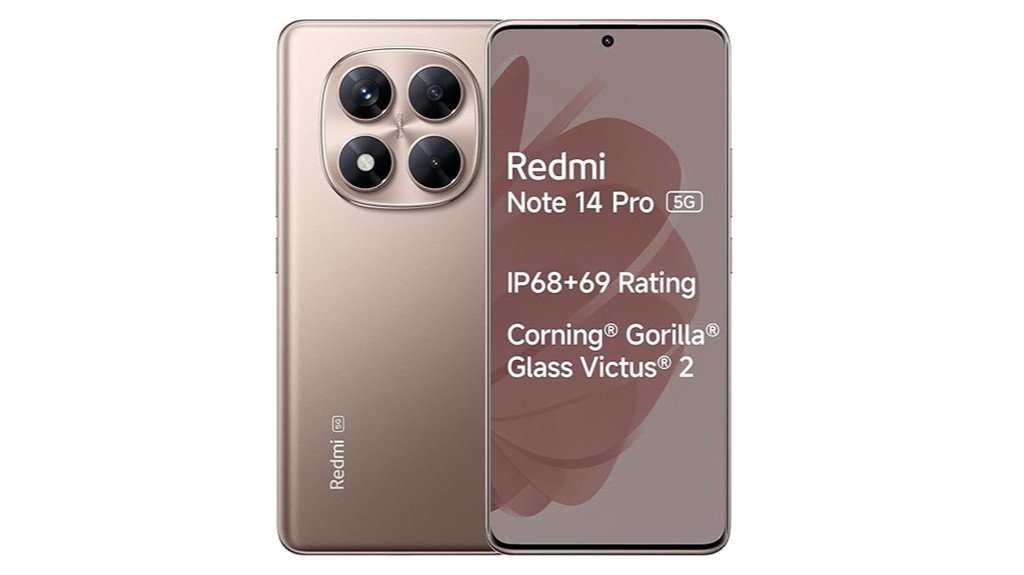
Ideal for users prioritizing long battery life and a premium display on a budget, the Redmi Note 14 Pro 5G pairs a 5,500 mAh battery with 45W fast charging and a 6.67-inch 1.5K curved AMOLED protected by Corning Gorilla Glass Victus 2, offering durable, vivid daily performance. It runs Android 14 on a MediaTek Dimensity 7300 Ultra with 8GB RAM and 128GB expandable storage. Camera hardware includes a 50MP Sony main, 8MP and 2MP rear modules, plus a 20MP front camera. IP68/IP69-rated build, dual SIM, USB‑C, infrared, and in-box 45W charger round out the Champagne Gold package.
Best For: Ideal for users who want long battery life and a premium, durable AMOLED display in an affordable 5G smartphone with solid cameras and expandable storage.
Pros:
- Large 5,500 mAh battery with 45W fast charging for extended daily use.
- 6.67″ 1.5K curved AMOLED with Corning Gorilla Glass Victus 2 and IP68/IP69 durability.
- Powerful MediaTek Dimensity 7300 Ultra with 8GB RAM, 128GB expandable storage, and versatile camera hardware (50MP main + 8MP + 2MP, 20MP front).
Cons:
- No 3.5 mm headphone jack; audio via USB-C only.
- Some user reports of battery drain, heating, and occasional software/alarm issues.
- Item weight listed at 500 g may feel heavier than other phones in this class.
iQOO Z10 5G Smartphone (8GB RAM, 128GB)
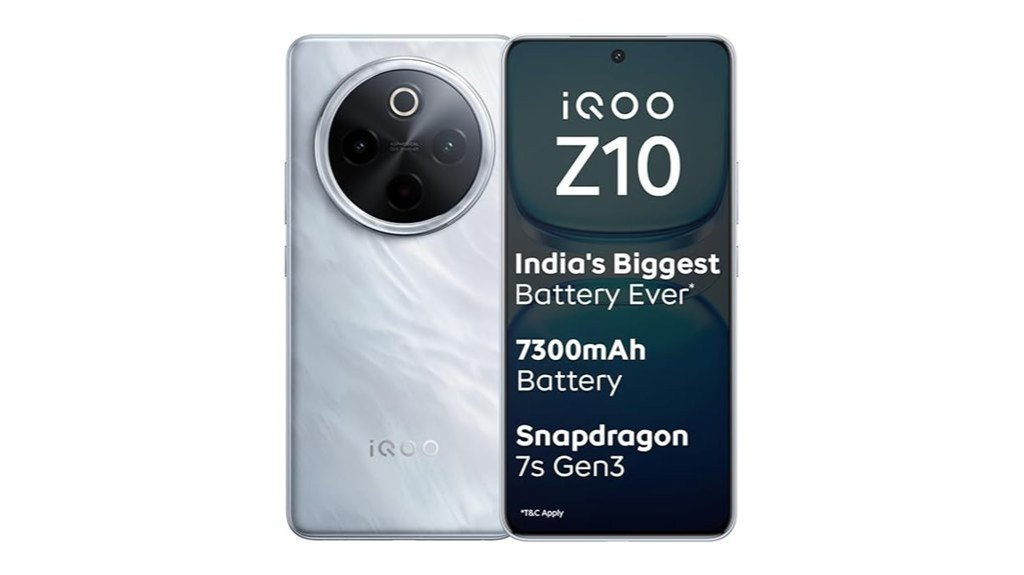
With its massive 7,300 mAh battery and 90W FlashCharge, the iQOO Z10 5G is the best pick for users who prioritize all-day (and multi-day) endurance without sacrificing fast charging or a bright, high-refresh AMOLED display. The quad-curved 120 Hz panel reaches up to 5000 nits peak, though reds can appear vivid; tempered glass fitting is tricky. Powered by Snapdragon 7s Gen 3 and 8GB RAM (128GB storage), it delivers strong benchmarks and smooth gaming. Cameras are serviceable—50MP OIS rear and 32MP front—with helpful AI tools. Notable downsides: below-average speakers and limited long-term OS updates.
Best For: Power users and gamers who need multi-day battery life with very fast charging and a bright 120 Hz AMOLED display without sacrificing smooth performance.
Pros:
- 7,300 mAh battery with 90W FlashCharge offers multi-day endurance and very fast top-ups.
- Bright quad-curved 120 Hz AMOLED (up to 5000 nits peak) provides vivid, smooth visuals for gaming and media.
- Strong performance from Snapdragon 7s Gen 3 (8GB RAM, 128GB storage) plus useful AI camera features and OIS on the 50MP rear.
Cons:
- Speaker audio reported as below-average for media and calls.
- Limited long-term Android updates (2 years OS, 3 years security patches) compared with some competitors.
- Quad-curved screen makes tempered glass protectors hard to fit and reds may appear overly vivid.
Factors to Consider When Choosing 5 Smartphones Under ₹25,000 in India
When selecting one of the five best smartphones under ₹25,000, the buyer should weigh core factors that affect daily use and longevity. Key considerations include raw performance and SoC efficiency, display quality, battery capacity with charging speed, camera capabilities, and the manufacturer’s software and update policy. Prioritizing these elements helps narrow choices based on personal needs like gaming, media consumption, photography, or long-term support.
Performance & SoC
Although raw clock speeds matter less than architecture and node, choosing a smartphone under ₹25,000 should start with the SoC: newer 4–6 nm designs typically deliver better multi‑core performance and energy efficiency than older 10–12 nm chips. The SoC’s CPU/GPU microarchitecture and fabrication node set baseline performance; benchmark ranges (AnTuTu/Geekbench) and sustained throttling scores indicate real‑world gaming and multitasking headroom better than peak clocks. Confirm RAM type and bandwidth (LPDDR5/5X preferred over LPDDR4X) and storage standard (UFS 3.1/2.2 versus eMMC) because they affect app load times and multitasking responsiveness. Assess integrated modem features (5G sub‑6 GHz, carrier aggregation) for network throughput and battery impact. Finally, match SoC performance to device cooling: higher sustained output requires robust heat spreaders or vapor chambers to minimise thermal throttling.
Display Quality
After considering SoC performance and thermal design, screen quality becomes the next major determinant of everyday experience, since it affects readability, media enjoyment and battery use. Prospective buyers should prefer at least FHD+ resolution on 6.5–6.8‑inch panels to preserve text sharpness and image detail. AMOLED or high‑quality OLED panels are recommended for true blacks, superior contrast and generally better power efficiency than LCDs. Smoothness benefits from 90–120 Hz refresh rates and touch sampling of 180 Hz or more, improving scrolling and gaming responsiveness. Outdoor legibility requires typical brightness around 600 nits with peak local boosts near 1000 nits for HDR. Finally, wide color gamut (DCI‑P3), HDR10/HDR10+ support and robust cover glass (Corning/Gorilla) enhance color, dynamic range and durability.
Battery & Charging
In assessing battery and charging for sub‑₹25,000 smartphones, capacity and real‑world endurance matter more than raw numbers: a 5,000 mAh pack is the practical baseline for a full day and often 1.5–2 days of light use, while 6,000 mAh+ cells extend runtime at the cost of added bulk. Buyers should weigh listed mAh against measured screen‑on time, video playback and manufacturer endurance claims, since chipset efficiency and software optimisations change outcomes. Fast‑charge wattage matters — 45W–90W options cut top‑up times — but confirm whether the high‑watt charger is included. Inspect supported protocols (USB‑PD, PPS, proprietary), wireless and reverse charging, and safety features like thermal protections, adaptive battery modes and health‑preserve settings to limit long‑term capacity loss.
Camera Capabilities
How should buyers judge camera capabilities within a ₹25,000 budget? Buyers should first examine sensor resolution and aperture — higher megapixels and wider apertures (f/1.8–f/2.0) aid detail and low‑light performance. Optical image stabilization (OIS) and electronic stabilization matter for cleaner night shots and steady 4K video. Multi‑camera arrays offering a 50MP+ main sensor, an ultrawide, plus a telemacro or 2x/3x telephoto boost compositional flexibility. Video specs — maximum resolution/frame rate, HDR/Super HDR, night video modes, and 4K/60fps support — determine recording capability. Computational photography features such as night mode, HDR processing, AI scene recognition, and object eraser significantly affect results. Together with hardware, these features define practical imaging quality within this price segment.
Software & Updates
Image processing and camera features rely heavily on software, so buyers should treat update policy and OS support as part of a phone’s imaging equation. Buyers should prefer devices that ship on the latest Android release (Android 15 in 2025) to maximise feature lifespan and compatibility with new camera algorithms. Explicit vendor commitments for major Android upgrades and years of monthly or quarterly security patches matter when comparing options. A proven track record of timely security patches and major updates reduces exposure to vulnerabilities. Lightweight or near‑stock skins typically receive updates faster and carry fewer unwanted apps. For users planning extended longevity, prioritise phones that support Project Treble/Mainline or offer an unlocked bootloader policy to ease custom ROM installation and long‑term software support.
Build & Durability
Often overlooked, a phone’s build and durability determine how well it survives daily use and accidents, so buyers should scrutinise materials, ingress protection, and structural design before deciding. Attention to glass type or coatings (for example, Gorilla Glass variants) and whether the frame is metal or polymer informs scratch resistance and structural integrity. Official IP ratings (IP67/IP68) give meaningful protection versus uncertified devices. Chassis rigidity, thickness and weight metrics indicate resistance to bending; metal-framed or thicker phones generally feel more robust. For higher shock resilience, check for advertised drop or military‑standard (MIL‑STD) claims and manufacturer test details. Protective design elements — reinforced corners, raised camera housings, and included screen protectors or cases — reduce screen and lens damage in drops.
Connectivity Options
After assessing a phone’s build and durability, buyers should next evaluate connectivity because daily experience hinges on reliable network, wireless and location features. The phone must support India’s common 4G LTE bands (including Bands 3/5/40) and at least one 5G NR band for future-proofing, as band support directly affects coverage and speeds. Dual‑SIM standby with simultaneous 4G/5G VoLTE on both slots is important for using two active data/voice lines. Wi‑Fi should be dual‑band with Wi‑Fi 5 (802.11ac) or Wi‑Fi 6 (802.11ax) for stable high throughput. Bluetooth 5.2+ is recommended for range, efficiency and modern codecs. Presence of NFC enables contactless payments; multi‑constellation GNSS (GPS+GLONASS+Galileo) yields faster, more accurate fixes.
Value for Money
Choosing five smartphones under ₹25,000 requires balancing specs, endurance and long‑term support to get the best value per rupee; key comparisons should therefore focus on performance‑to‑price (RAM, storage and processor benchmarks), battery capacity and charge rates, promised OS/security updates, display quality, and build/accessory inclusions so buyers can quantify real-world usability and hidden costs. Value assessment compares core‑spec ratios — aim for at least 8GB RAM and 128GB storage or equivalent performance‑per‑rupee, using benchmark scores to separate marginally faster chips. Prioritise ≥5,000 mAh batteries with ≥25W charging for uptime and convenience. Prefer models promising multiple years of OS/security updates. Evaluate display type (AMOLED or high‑contrast FHD+, 90–120Hz) and build features (IP rating, Gorilla Glass, included charger/case, warranty) to reduce hidden ownership costs.
Conclusion
Choosing a smartphone under ₹25,000 in India hinges on balancing performance, battery life, camera capability and software support. The Samsung Galaxy A55 5G, Nothing Phone (3a), OnePlus Nord CE5, Redmi Note 14 Pro 5G and iQOO Z10 5G each target different priorities—durability and display, clean software, raw speed with fast charging, camera quality, and gaming‑focused performance respectively. Buyers should weigh personal needs against these strengths to find the best value.