

In 2025, budget flagship traits have migrated into the sub‑₹15,000 segment, offering balanced performance, long battery life and competitive camera setups. The shortlist favors phones that deliver smooth daily use, reliable updates and sensible extras like Widevine L1 or expandable storage. The five picks highlight different strengths across brands, each with trade‑offs worth weighing before making a choice.
- Lava Blaze AMOLED 2 5G Smartphone (Feather White, 6GB RAM, 128GB Storage)
- Samsung Galaxy M06 5G Smartphone (Sage Green, 6GB RAM, 128GB)
- Motorola G45 5G (Brilliant Blue, 8GB RAM, 128GB Storage)
- POCO M6 5G Smartphone (4GB RAM, 64GB Storage)
- Redmi 15 5G Smartphone (Midnight Black, 6GB/128GB)
- Factors to Consider When Choosing Smartphones Under ₹15,000 in 2025
- Performance & Chipset
- Display Quality & Refresh
- Battery Life & Charging
- Camera Capabilities
- Software & Updates
- Conclusion
Lava Blaze AMOLED 2 5G Smartphone (Feather White, 6GB RAM, 128GB Storage)
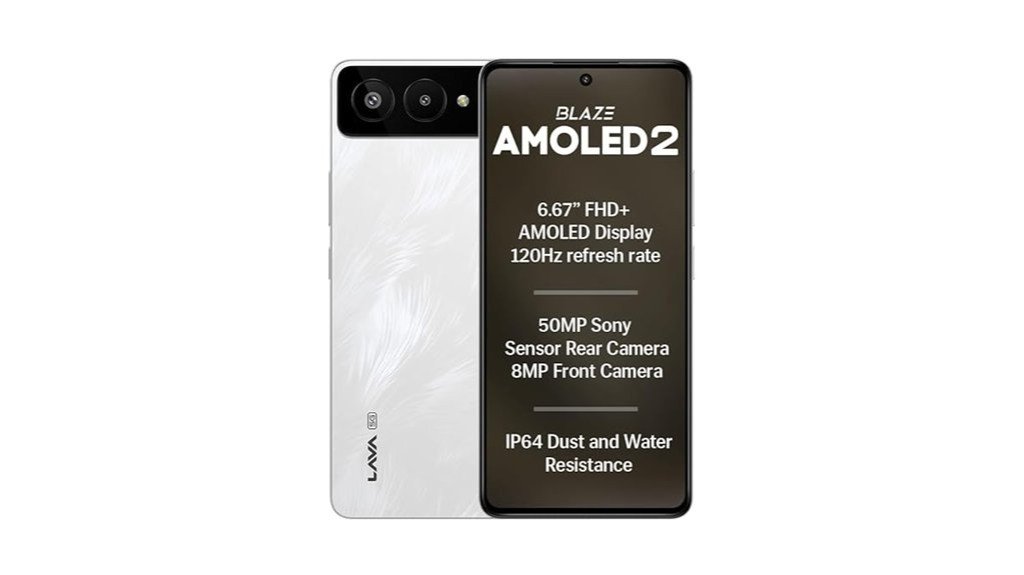
The Lava Blaze AMOLED 2 5G is best suited for buyers who prioritize a high-quality viewing and audio experience on a budget: its 6.67″ FHD+ 120 Hz AMOLED with 10-bit color and stereo speakers delivers vivid, smooth multimedia playback, while a 5000 mAh battery and 33W fast charging support long daily use. The device pairs a MediaTek Dimensity 7060, 6GB LPDDR5 (expandable virtually to 12GB) and 128GB UFS 3.1 for balanced performance. Imaging relies on a 50MP Sony IMX752 with AI modes; users report slight oversharpening. Android 15 offers a clean UI; IP64 adds splash protection.
Best For: buyers who want a vivid, high-refresh AMOLED display and strong audio in an affordable, long‑lasting 5G phone with a clean Android 15 experience.
Pros:
- 6.67″ FHD+ 120 Hz 10‑bit AMOLED and stereo speakers for excellent multimedia playback.
- 5000 mAh battery with 33W fast charging plus efficient MediaTek Dimensity 7060 and 6GB LPDDR5 (virtual RAM up to 12GB) for balanced everyday performance.
- Clean stock Android 15 (no bloat/ads), IP64 splash resistance, and quality 50 MP Sony IMX752 rear camera with AI modes.
Cons:
- Some users report slight oversharpening in photos and lack of a dedicated macro lens/macro mode.
- Charging and battery performance feedback is mixed vs. competitors (33W may feel slower to some).
- Reported issues with VoNR/calls, accessory availability, and variable after‑sales/returns experiences.
Samsung Galaxy M06 5G Smartphone (Sage Green, 6GB RAM, 128GB)
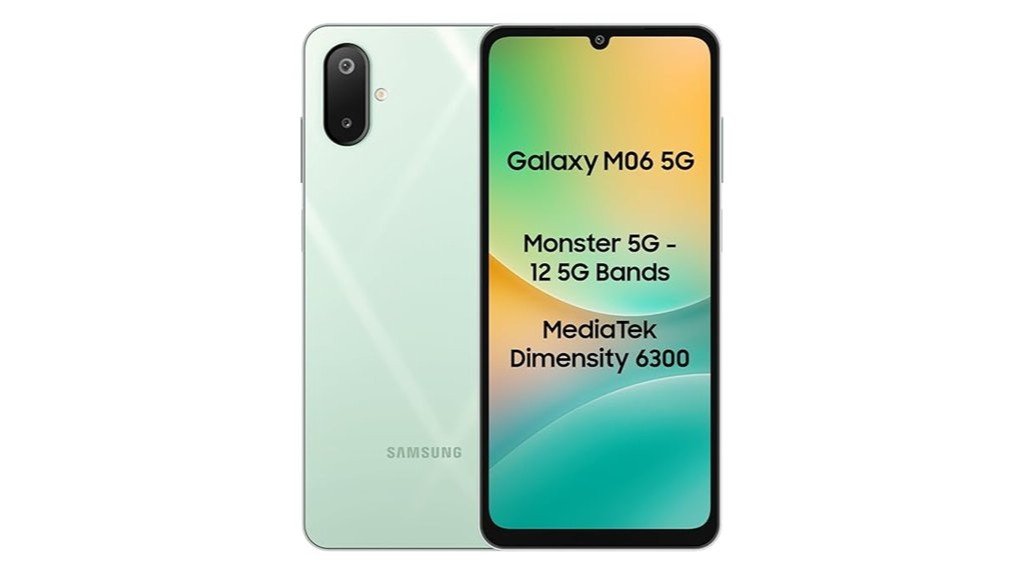
Positioned for buyers who prioritize long battery life and 5G connectivity without breaking the ₹15,000 ceiling, the Samsung Galaxy M06 5G pairs a 5,000 mAh cell and 25W fast-charge support with broad 12-band 5G coverage. Powered by a MediaTek Dimensity 6300 (AnTuTu ~422K+) and up to 6GB RAM, it handles multitasking and light gaming; Android 15 with One UI 7.0 promises four OS upgrades and four years of security updates plus Knox. A 720×1600 display delivers vibrant, AMOLED-like color. Camera performance is solid in good light (50MP main), while users note occasional heating, mixed audio levels, and no charger in-box.
Best For: buyers seeking long battery life and wide 5G support in an affordable phone under ₹15,000 with promise of multi-year Android updates.
Pros:
- Large 5000 mAh battery with 25W fast-charge support and good real-world endurance.
- Broad 12-band 5G compatibility, solid connectivity, and up-to-date Android 15 with 4 OS upgrades + 4 years security updates.
- Good daytime camera performance (50 MP main), vibrant AMOLED-like 720×1600 display, and slim 8 mm design.
Cons:
- Ships without a charger and includes a USB‑C to C cable that some users found incompatible with existing chargers.
- Occasional heating under heavy use and only hybrid SIM tray (no dedicated microSD slot).
- Mixed audio loudness reports and modest performance for heavy gaming despite decent AnTuTu score.
Motorola G45 5G (Brilliant Blue, 8GB RAM, 128GB Storage)
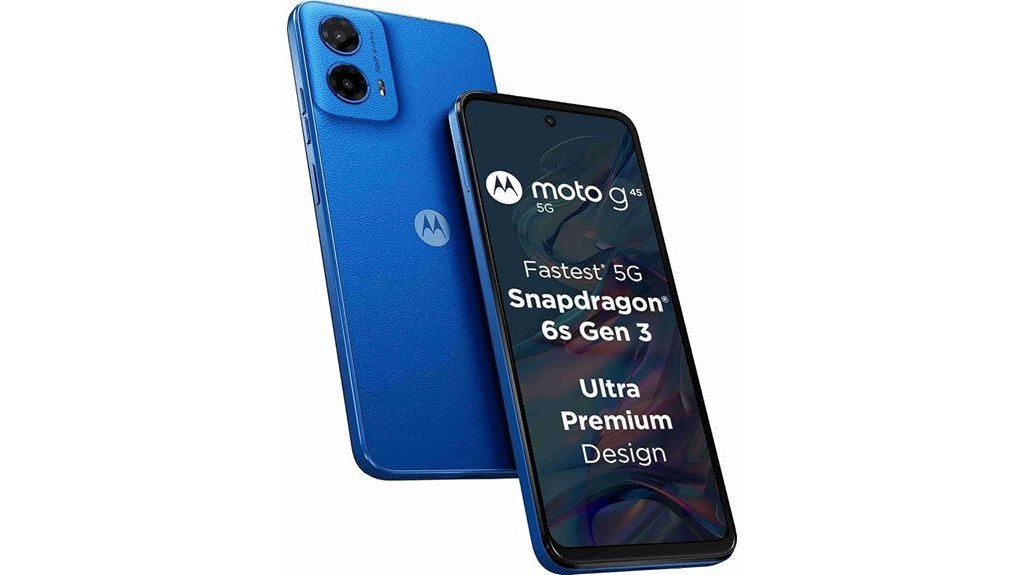
Offering a 120 Hz display and a Snapdragon 6s Gen 3 chipset, the Motorola G45 5G (Brilliant Blue, 8GB/128GB) is best suited for users who prioritize smooth daily performance and long battery life on a budget. It runs Android 14 with a near‑stock experience and Motorola gestures. The 5000 mAh battery and 20 W charging deliver reliable endurance; benchmarks rate the processor “very good.” A 720p LCD limits sharpness and color compared with AMOLED rivals. Cameras are adequate but hampered by software sluggishness and weak macro shots. Hybrid SIM/microSD tradeoffs, occasional heating and preinstalled notification prompts are noted.
Best For: budget-conscious users who want smooth everyday performance, long battery life, and a near-stock Android experience with 5G.
Pros:
- 120 Hz display for fluid navigation and scrolling.
- Snapdragon 6s Gen 3 with 8 GB RAM delivers reliable day-to-day performance.
- Large 5000 mAh battery provides long endurance.
Cons:
- 720p LCD limits sharpness and color compared with AMOLED rivals.
- Camera performance hampered by sluggish software and weak macro shots.
- Hybrid SIM slot and slower 20 W charging vs faster competitors.
POCO M6 5G Smartphone (4GB RAM, 64GB Storage)
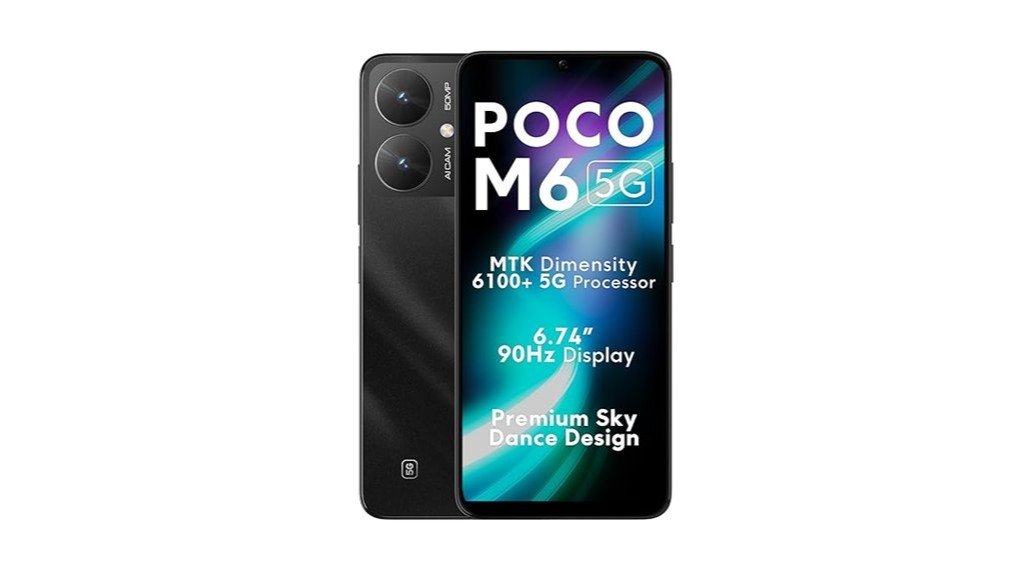
Targeted at budget-minded 5G users who prioritize battery endurance, the POCO M6 5G pairs a 5000 mAh battery with a 90 Hz 6.74″ display to deliver long screen-on time and smooth basic navigation. Equipped with a MediaTek Dimensity 6100+ SoC, Android 13 with MIUI 14/HyperOS updates, and 4 GB RAM plus 64 GB storage (expandable via microSD), it offers competent everyday performance with occasional lag reported. The 50 MP AI dual-camera yields mixed results, while a 3.5 mm jack, side fingerprint sensor, Gorilla Glass 3 and 18W charging add practical value at this price.
Best For: budget-minded 5G users who prioritize long battery life and a large smooth 90 Hz display for everyday tasks.
Pros:
- Long-lasting 5000 mAh battery with 18W charging for nearly a full day of use.
- Large 6.74″ 90 Hz display with Gorilla Glass 3 and 600 nits peak brightness for good visibility.
- 5G connectivity, expandable storage (microSD), 3.5 mm jack and side fingerprint sensor for practical everyday features.
Cons:
- 4 GB RAM (base) and occasional lag reported can limit multitasking and heavier use.
- 50 MP dual-camera delivers mixed image quality compared to competitors.
- Some MIUI/HyperOS features missing or inconsistently available on certain builds.
Redmi 15 5G Smartphone (Midnight Black, 6GB/128GB)
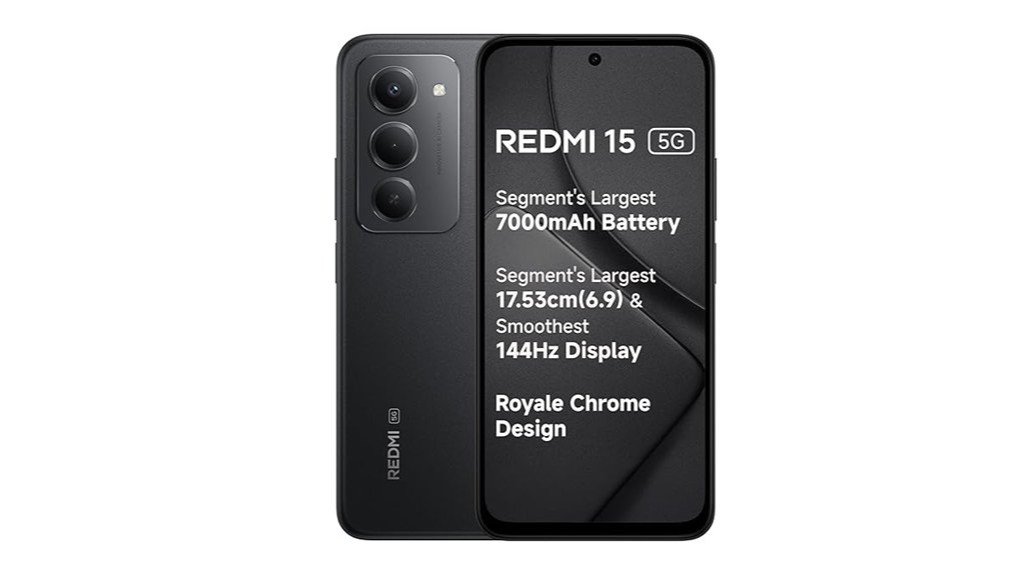
With its 7,000mAh battery and up to 144Hz FHD+ display, the Redmi 15 5G suits users who prioritize all-day endurance and smooth visuals without breaking the sub-₹15,000 budget. It pairs a segment-leading 7000mAh cell with 33W fast charging and 18W reverse charging; real-world endurance often reaches two days under heavy use, though some report effective capacity nearer 5,500mAh. A 6.9″ FHD+ panel and slim chassis balance size and feel, while Snapdragon 6s Gen 3, 6GB RAM and 128GB storage handle gaming and multitasking with occasional lag. The 50MP dual camera, HyperOS on Android 15, dust/water resistance and in-box case add further value.
Best For: power users on a tight budget who need multi-day battery life and a smooth high-refresh display for gaming and media.
Pros:
- Massive 7000mAh battery with 33W fast charging and 18W reverse charging — real-world use often reaches two days.
- 6.9″ FHD+ display with up to 144Hz refresh for very smooth visuals.
- Solid value package: Snapdragon 6s Gen 3, 6GB/128GB, Android 15 HyperOS, 50MP dual camera, dust/water resistance and included protective case.
Cons:
- Large 6.9″ size can feel unwieldy for one-handed use.
- Some users report lower practical battery capacity (~5500mAh) and occasional performance lag.
- No 3.5 mm headphone jack listed and some complaints about display quality.
Factors to Consider When Choosing Smartphones Under ₹15,000 in 2025
When selecting a smartphone under ₹15,000 in 2025, buyers should weigh performance and chipset, display quality and refresh rate, battery life and charging, camera capabilities, and software update support. Each factor directly affects everyday usability, from smooth multitasking and gaming to photo quality and device longevity. Comparing these elements across models helps identify the best value for specific needs.
Performance & Chipset
A modern mid‑range chipset is the single most influential factor for real‑world performance, so buyers should seek octa‑core SoCs built on ≤6nm process nodes with single‑core clocks around 2.4–2.6 GHz to ensure efficient multitasking and competitive AnTuTu scores (roughly 400–500K). Complementary components matter: LPDDR5 RAM or at least LPDDR4X and UFS 3.1 storage significantly improve app launches, background retention, and file transfers versus older standards. RAM expansion (virtual RAM) that adds +4–6 GB can help short‑term multitasking but is a stopgap compared with physical RAM for sustained workloads. GPU capability must match any high refresh rate display to avoid wasted frames. Finally, reported thermals and charging power affect sustained performance, since inadequate cooling or power delivery causes throttling despite a capable SoC.
Display Quality & Refresh
Many buyers should insist on AMOLED or high‑quality IPS panels at FHD+ resolution (≈1080 x 2400) on 6.5–6.8″ displays to ensure sharp text, accurate colors, and efficient battery use. Priority should be given to 90–120 Hz refresh for visibly smoother scrolling and UI animations, with adaptive or variable refresh to reduce power draw when static content is shown. Seek 10‑bit color or wide DCI‑P3 coverage and high peak brightness (≥600 nits typical, ≥1000 nits APL) for HDR content and outdoor legibility. Confirm HDR support and Widevine L1 for high‑bitrate streaming. Practical protections—Gorilla Glass or equivalent, oleophobic coating, and a pre‑applied protector or case—improve longevity. Useful software features include color profiles, reading mode, and automatic color temperature adjustment.
Battery Life & Charging
Typically, buyers should target phones with at least a 5000 mAh battery and USB‑C fast charging to secure a full day of mixed use and quick top‑ups. Beyond capacity, rated charging speeds (18W, 25W, 33W) and manufacturer statements about time to 50% or full charge indicate real-world top‑up performance. Battery longevity depends on efficiency factors: higher refresh rates, greater resolution, and older SoC process nodes increase drain. Software and power‑management features—adaptive refresh, dark mode, aggressive background app limits—meaningfully extend usable time beyond raw mAh figures. Frequent travelers or heavy‑app users should prioritize robust fast charging and options like reverse charging or wired power‑bank compatibility to reduce downtime. Balance capacity, efficiency, and charging ecosystem when choosing under ₹15,000.
Camera Capabilities
How should buyers evaluate camera capabilities on phones under ₹15,000 in 2025? Buyers should weigh sensor size alongside megapixel count: larger sensors and effective pixel size often outperform high MP numbers for low‑light clarity. Optical image stabilization (OIS) is ideal; where absent, reliable electronic stabilization (EIS) helps handheld photos and smoother video. Aperture matters, but combine wider lenses with strong multi‑frame night/HDR processing for superior low‑light results. Confirm video specs and audio capture—FHD@60 or 4K@30 with stabilization is preferable for events and vlogs. Inspect auxiliary lenses (ultra‑wide, telephoto, depth) and verify software supports portrait mode, RAW export, and Pro controls to maximize creative flexibility and post‑processing potential.
Software & Updates
Strong camera hardware and software are only part of the ownership experience; software policy and update reliability determine long‑term performance and security. Buyers should check promised OS upgrades and security patch cadence—cheaper phones often receive fewer major Android versions and less frequent patches. Preference goes to devices shipping with Android 15 (2025) or a recent release to maximize feature parity and update window. Lighter, near‑stock skins are preferable to heavy OEM overlays, reducing intrusive prompts and often enabling faster patch delivery. Confirm update delivery methods and transparency: OTA support, rollback options, update sizes and public roadmaps help avoid fragmented rollouts. Built‑in privacy and security measures, Google Play Protect compatibility and timely vulnerability fixes are essential components of the update commitment.
Conclusion
In 2025, buyers seeking the best smartphone under ₹15,000 can expect well‑rounded choices that balance performance, battery life, display quality and software support. The highlighted models deliver modern 5G SoCs, crisp FHD+ screens, 5,000mAh+ batteries with fast charging and capable 50MP main cameras. Emphasis on at least two major OS upgrades, Widevine L1, build reliability and practical extras helps ensure long‑term value, letting users prioritize whichever mix of features suits their needs.